



Incontinence Bodysuit for Care Homes and Home Care — Buyers Guide
10.06.2026
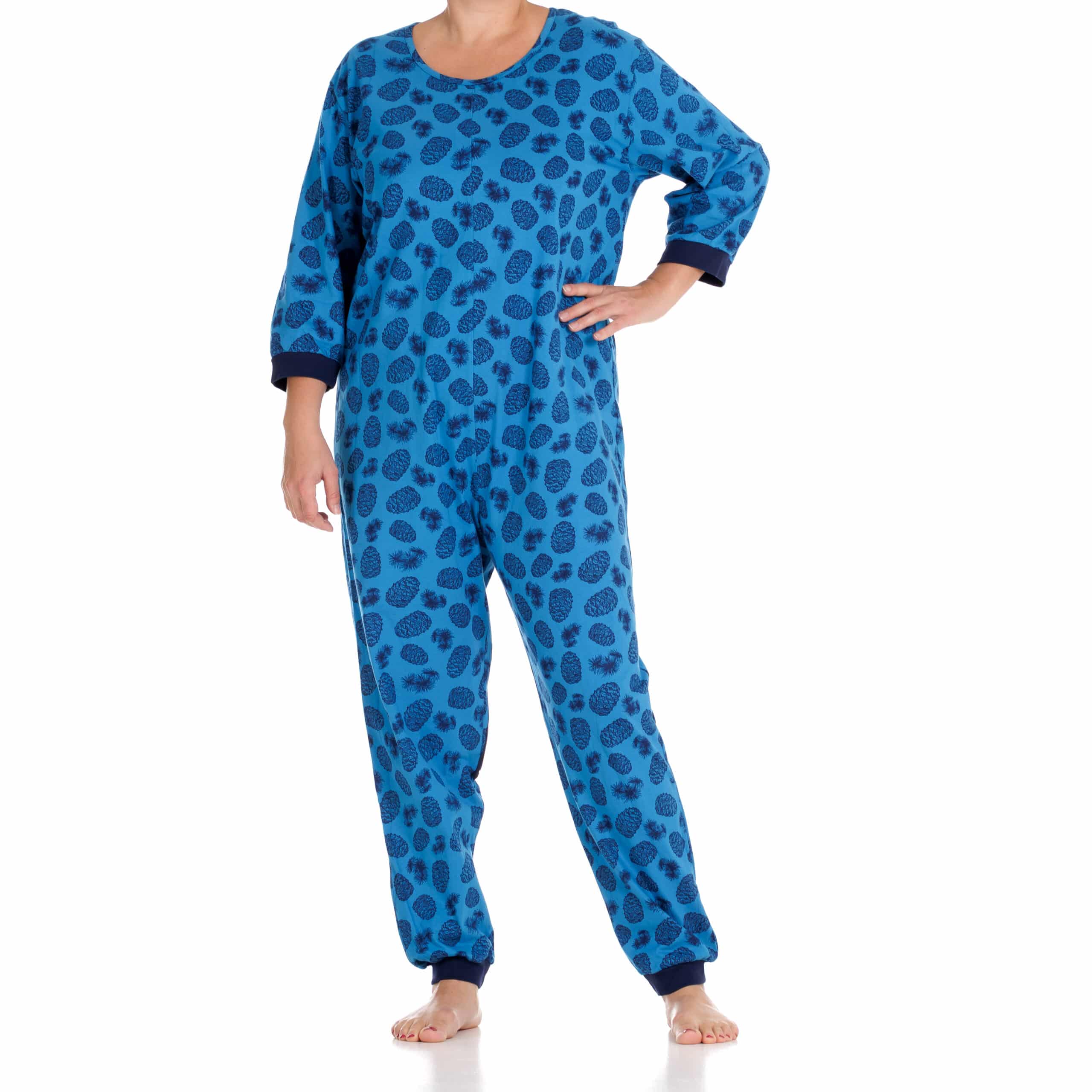
An incontinence bodysuit is an indispensable aid in the daily work of care homes, hospitals and home care whenever a resident repeatedly removes their incontinence pad or clothing. The right bodysuit preserves the resident’s dignity, makes the carer’s job easier and significantly reduces the costs caused by soiled beds and textiles.
In this guide we cover the situations an incontinence bodysuit is suited to, what a good model is made from, what to look out for when purchasing and how to care for the product so that it lasts as long as possible in use.
What is an incontinence bodysuit and who is it for
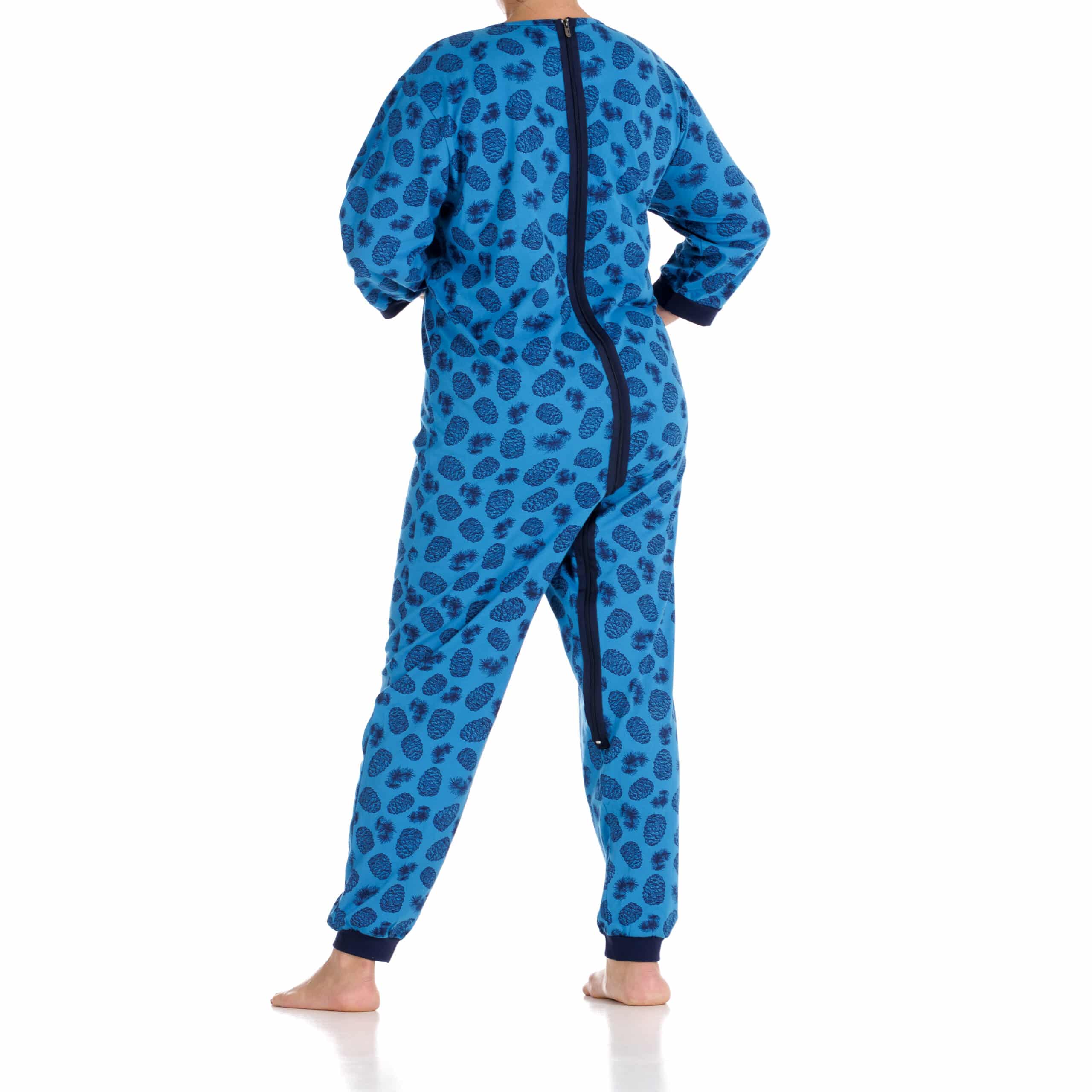
An incontinence bodysuit is a one-piece garment with a zip that runs across the back or along the side. The design means the wearer cannot take the garment off by themselves, which makes it particularly suitable for residents with dementia, restlessness or incontinence. An incontinence bodysuit does not restrict movement — it simply prevents independent undressing.
Typical user groups include:
- Residents with advanced dementia, such as Alzheimer’s disease
- Restless or confused patients in care homes and rehabilitation units
- Incontinence patients whose repeated pad removal creates a hygiene risk
- Residents of psychogeriatric units
- Home care clients whose relatives cannot supervise through the night
An incontinence bodysuit does not replace other care and should never be the primary solution — its use must always be justified in the care plan and discussed with relatives. The goal of use is always the resident’s wellbeing and hygiene, not merely making care work easier.
Choosing an incontinence bodysuit: 5 key criteria
Choosing a good incontinence bodysuit directly affects the resident’s comfort and the smoothness of the carer’s work. Pay attention to the following:
1. Material. Favour 100% cotton or a cotton–polyester blend. The skin breathes and the garment does not chafe even in prolonged use. Avoid fully synthetic materials, which can cause sweating and skin irritation.
2. Zip position. A back-fastening zip is the most effective at preventing self-undressing. A side zip is slightly easier for the carer but less secure. Some models also have a built-in locking loop that the carer can open but the resident cannot.
3. Seams and finishing. Flat, padded seams leave no pressure marks on the skin. This is especially important for bedridden patients whose skin is in constant contact with the fabric. Check also that the zip end is protected with padding.
4. Wash durability. An incontinence bodysuit should withstand industrial washing at at least 90 °C. Ask the supplier for an estimate of the number of wash cycles — a quality product lasts 200–300 washes without the colour or shape suffering. A cheap model may last only a few dozen washes, which multiplies the total cost.
5. Sizes. Check that the incontinence bodysuit is available in several size classes (S–XXL). A garment that is too large or too small reduces both comfort and effectiveness. A good supplier also offers special sizes for bariatric residents.
The incontinence bodysuit as part of a wider care concept
Alongside the incontinence bodysuit, care units typically use several other products that support the same care goal. By combining these products, the unit gets a comprehensive solution that saves both working hours and material costs.
A care unit’s basic equipment typically includes:
- Waterproof mattress protectors that prevent the mattress from being soiled
- Washable bed pads that collect any leaks and reduce the need for changes
- A back-zip nightshirt, a lighter alternative for night-time use
- Slide sheets that make it easier to move and turn the patient in bed
When these products are sourced from the same supplier, the material and laundering style are consistent. This simplifies the unit’s logistics and reduces errors in the laundry.
Care and service life of an incontinence bodysuit
An incontinence bodysuit lasts a long time when cared for correctly. Always wash the product according to the manufacturer’s instructions — most quality bodysuits withstand industrial washing at 90 °C. Avoid fabric softener, as it can weaken the fibre’s breathability and absorbency.
After each wash, check the zip and seams. Small tears are best repaired immediately so that the garment does not become completely unusable. The zip end in particular is exposed to wear, as it is opened and closed several times a day.
The quantity of bodysuits to purchase depends on the number of residents in the unit. As a general rule of thumb, count at least three garments per resident: one in use, one in the wash and one in reserve. In active use the number may be higher.
Certifications and safety
A good incontinence bodysuit is Oeko-Tex Standard 100 certified. The certificate guarantees that the product contains no chemicals harmful to the skin — this is especially important for elderly people with sensitive skin and long-term patients who wear the garment for several hours a day.
Check also that the product meets the EU’s general textile safety requirements and that the supplier can provide traceability from production to end user. European manufacturing is often a more reliable option than a garment imported from Asia, because the chain of oversight is shorter.
The incontinence bodysuit and ethical care
The use of an incontinence bodysuit is a restrictive measure, even though it does not prevent the resident from moving. Its use must always be justified and recorded in the care plan. Good practice covers the following points:
- Use is based on the resident’s wellbeing, not merely on easing the workload
- Relatives are aware of the product’s use and the reasons for it
- The need for use is assessed regularly — the situation may change
- The resident is spoken to about the garment as ordinary clothing, not as a restraint
This approach respects the resident and ensures that the incontinence bodysuit is a therapeutic aid, not an instrument of control. It also matters from the perspective of supervisory authorities: in care home quality monitoring, the use of restrictive aids is always assessed through documentation.
Frequently asked questions
Can an incontinence bodysuit be used during the day too? Yes. An incontinence bodysuit is suitable for both night and day use. During the day the resident can wear trousers or a dress over it, so the bodysuit is not visible.
How do I identify the right size? Measure the resident’s height and waist circumference. Compare the figures with the supplier’s size chart. A bodysuit that is too loose loses its effect, while one that is too tight causes discomfort.
How often should an incontinence bodysuit be changed? Morning and evening, and whenever it becomes soiled. For hygiene reasons, a bodysuit is not used for several days in a row without washing.
Is an incontinence bodysuit the same as an ordinary jumpsuit? No. An ordinary jumpsuit opens at the front and the wearer can open it themselves. The zip of an incontinence bodysuit is always in a place the wearer cannot reach.
Is a relative’s consent needed to use one? Care units should always discuss with relatives before using restrictive products. An incontinence bodysuit is not an actual restraint, but openness towards relatives is always the best practice.
The incontinence bodysuit and costs — when it pays off
An incontinence bodysuit is not the cheapest single product, but it pays for itself quickly. One quality bodysuit costs around €30–50 and lasts 200–300 wash cycles. Compare this with how much working time goes into repeatedly washing a restless resident’s soiled bed, and how much money into replacing mattresses.
In a care home with 50 residents, of whom say ten need an incontinence bodysuit, the annual cost typically stays under €1,500. The same sum is recovered within a few months in saved laundry hours and extended mattress life.
When evaluating a purchase, it is not worth fixating on the unit price alone. The calculation should include:
- The purchase price of the product
- Estimated service life in number of wash cycles
- Carer working time saved compared with manual pad changes
- Longer service life of mattresses and bed linen
- The resident’s skin health and reduced complications
In most care units the overall calculation shows that a quality incontinence bodysuit is clearly the more affordable option than a cheaper model that lasts only a few dozen washes.
Order an incontinence bodysuit from Inelli
Inelli supplies incontinence bodysuits to care homes, hospitals and home care units across Northern Europe. The products are made in the EU from Oeko-Tex 100 certified materials and withstand industrial washing. The range includes several sizes and zip-position options, so you can find a suitable solution for every situation.
We specialise in serving resellers and large accounts: we offer volume pricing, fast delivery throughout Northern Europe and support with product selection. Request a quote directly from our become a distributor page, or explore our full product range in our online store.