



Slide Sheet for Patient Transfer — How to Choose the Right Model
10.06.2026
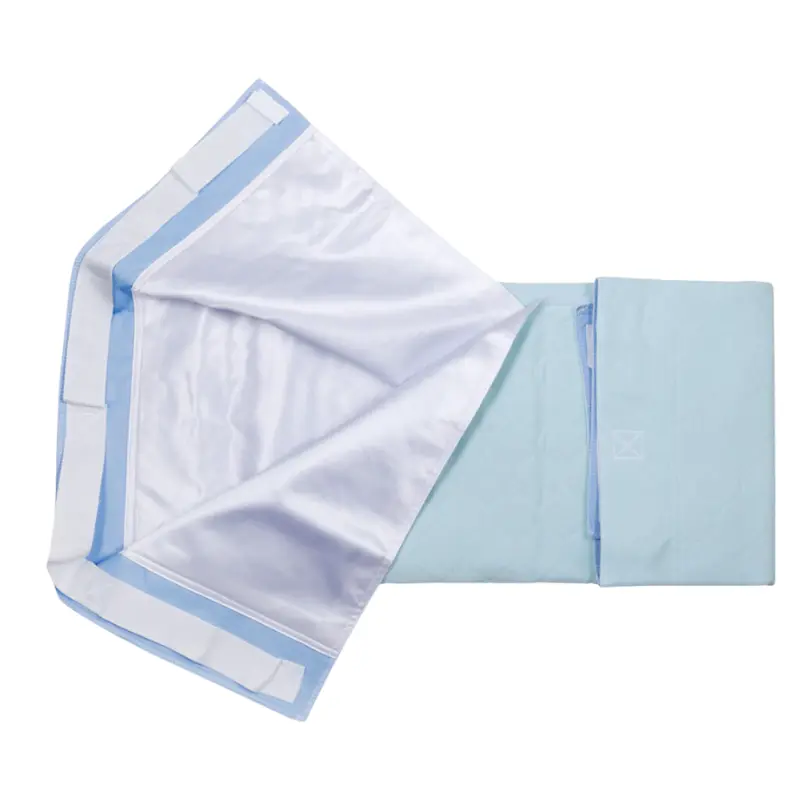
A slide sheet is one of the most important aids in care work. When chosen correctly and used as an everyday tool, it significantly reduces the carer’s physical load and makes moving the patient safer for both parties. In this guide we cover the situations a slide sheet is suited to, what models are on the market and how to choose the one best suited to your own use.
What is a slide sheet and when is it used
A slide sheet is a tubular or double-layered sheet made from two smooth, low-friction fabrics that allows a patient to be moved, turned or repositioned in bed with little force. The inner surface of the slide sheet glides against itself, so the carer does not have to lift the patient’s full weight.
Typical situations of use include:
- Turning the patient from one side to the other
- Moving the patient up the bed when they have slipped down
- Transferring the patient from the bed to a stretcher or wheelchair
- Changing position for long-term patients
- Preventing pressure ulcers through regular repositioning
It does not replace hoists for heavy patients, but it is an essential aid in all transfers where the patient cannot assist themselves.
Occupational safety and ergonomics
Back pain and shoulder injuries among care workers are among the most common occupational illnesses in healthcare. EU-OSHA has published extensive guidance on the ergonomics of patient handling, and in all recommendations the slide sheet is a central aid. When a slide sheet is adopted systematically, the carer’s physical load can fall by up to 70% compared with manual lifting without aids.
This is not only the carer’s benefit. When the transfer is controlled and smooth, the patient experiences a gentler movement, which reduces the risk of skin damage and falls. A slide sheet is therefore both an occupational safety and a patient safety matter.
Choosing a slide sheet: 5 key criteria
There are many kinds of models on the market, and choosing the right product depends on the unit’s patient base. Pay attention to the following:
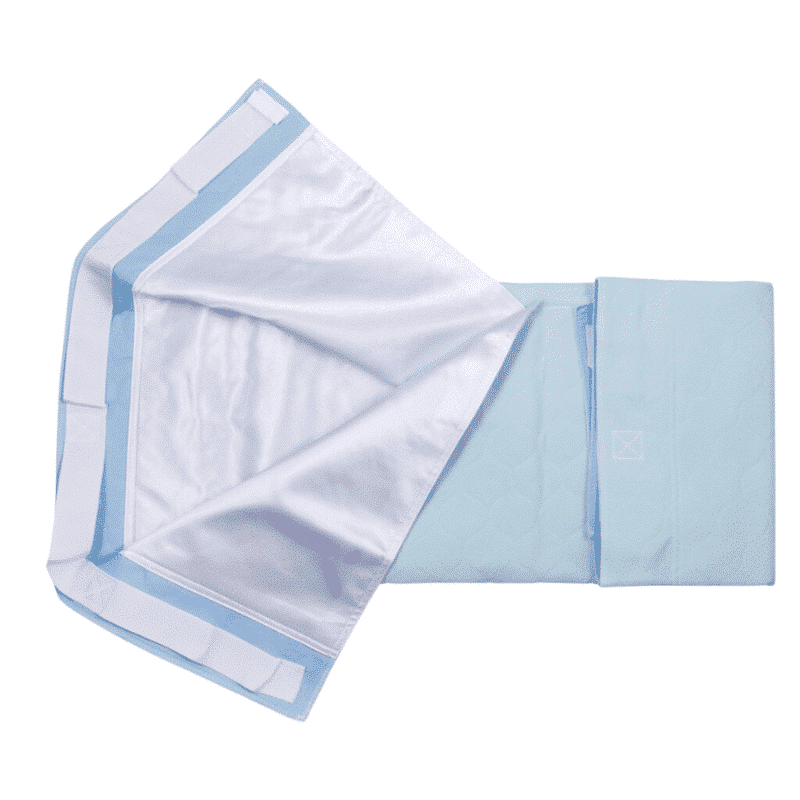
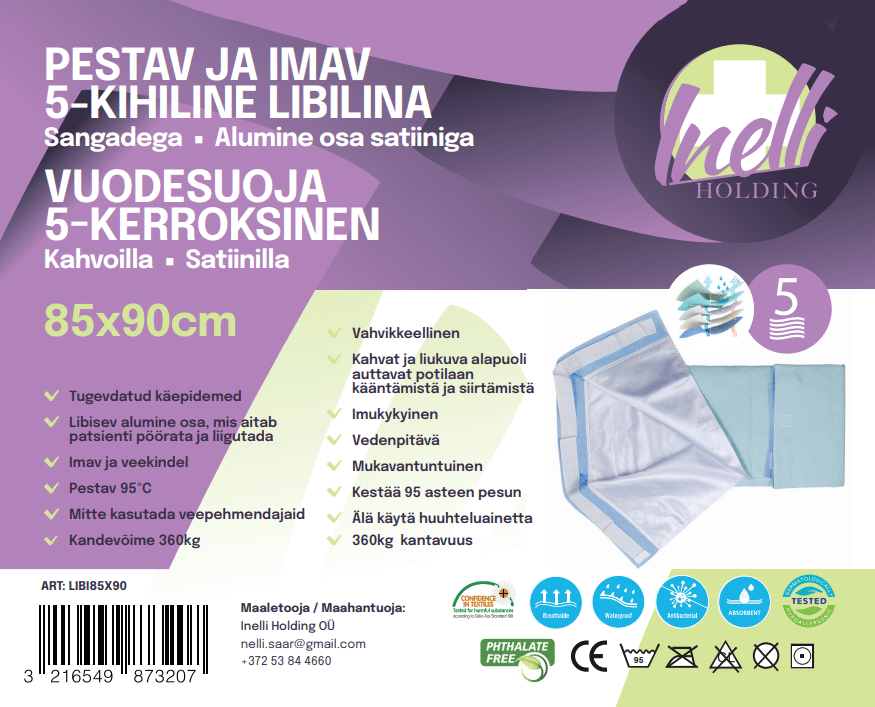
1. Size. Slide sheets are available in several sizes. The most common size, 85 × 90 cm, suits most situations, but larger patients need an XL model (105 × 125 cm). There are dedicated special sizes for bariatric patients.
2. Handled or handle-free. A slide sheet with handles (wings) makes the transfer even easier and more ergonomic for the carer. Handle-free models are cheaper and suit simple transfers.
3. Material and glide layer. A good model is made from durable polyamide or polyester with a special glide layer. The material must withstand repeated use without the glide property weakening.
4. Wash durability. The product must withstand industrial washing at 90 °C without the shape or glide property suffering. Cheap models lose their glide property after a few dozen washes.
5. Latex-free. To accommodate people with allergies, choose a latex-free model. This is in practice a standard in the EU, but it is worth checking with the supplier.
The correct transfer technique
It is a simple tool, but using it effectively takes a little practice. The most important thing is that the carer learns to use the glide property correctly and does not try to lift the patient with the sheet.
The steps of a basic transfer up the bed:
- Place the sheet under the patient by turning them from one side to the other
- Make sure the glide layer is between the patient and the mattress
- Place your feet firmly on the floor, knees slightly bent
- Pull the patient by the sheet’s handles with a slow, even movement
- Remove the sheet after the transfer, unless it is left underneath for the next transfer
The unit should arrange regular training on using the slide sheet — only mastering its use delivers all the ergonomic benefits. Most suppliers offer training materials and videos.
Other patient transfer aids
A slide sheet is often part of a wider set of aids:
- A transfer belt is needed when the patient is moved to standing or sitting
- A hoist is essential for heavy patients or those unable to assist
- A turning sheet is a simpler version of the slide sheet and suits light repositioning
- A waterproof mattress protector and washable bed pads protect the mattress even when the slide sheet is used regularly
By combining these products, the care unit gets a full patient transfer and bed care package that withstands use and supports the carer’s ergonomics.
Care and service life
It lasts several years when cared for correctly. Always wash the product according to the manufacturer’s instructions, usually at 90 °C without fabric softener. Fabric softener significantly weakens the glide property.
After each wash, check the handles, seams and glide surface. If the fabric starts to pill or the glide property feels clearly weakened, the product should be replaced. The length of service life depends on the number of wash cycles — a quality slide sheet lasts 200–300 washes.
Certifications and standards
A good product is Oeko-Tex Standard 100 certified, which guarantees that the product contains no chemicals harmful to the skin. In addition it meets the EU’s general requirements for medical aids and is CE-marked when classified as an aid.
European manufacturing is often more reliable than a product imported from Asia, because the chain of production oversight is shorter and the materials are traceable to their original source. You can find the detailed classifications and requirements for medical devices on the European Commission’s medical devices pages.
Repositioning and clinical guidelines
In clinical care guidelines, the slide sheet is mentioned as an established part of both pressure ulcer prevention and safe patient handling. Especially in long-term care, rehabilitation and dementia care, regular repositioning is a basic requirement, and in practice it is not achieved without a slide sheet or a comparable aid.
Good practice in a care home is that every bedridden patient’s care plan records a repositioning schedule (for example every 2–3 hours) and that staff know where the unit’s slide sheets are kept. When these two things are in order, repositioning is achieved both ergonomically and on time.
Monitoring use is also a quality management tool. Most care homes record repositioning in the patient information system, so its delivery can be reviewed afterwards. If there are no records of slide sheet use, it is worth considering why — either the aid is missing or its use requires further training.
Frequently asked questions
How many slide sheets does a care home need? Usually at least one slide sheet per two bed places, plus spares for when others are in the wash. In more active units the number may be higher.
Can a slide sheet be left between the mattress and the patient? For short periods yes, but not continuously. A slide sheet can slip out from under the patient unexpectedly and create a fall risk.
What is the difference between a slide sheet and a turning sheet? A slide sheet has two gliding layers, a turning sheet only one. The slide sheet suits moving up the bed, the turning sheet mainly turning from side to side.
Is a slide sheet the same as a hoist sling? No. A hoist sling is part of a hoist and is used to lift the patient out of the bed. A slide sheet is intended for transfers within the bed.
Storage and unit logistics
Planning the use of these sheets within the unit is an important part of realising the benefit. Good practice is that every bed place has its own sheet, or at least quick access to a shared trolley. When it is within reach, the carer uses it — when it is in another room, manual lifting becomes a temptation.
Practical recommendations for the unit:
- They are stored centrally together with clean textiles
- Soiled sheets go straight to the laundry collection point
- Unit management should monitor usage rates per carer
- New employees receive induction before their first shift
- The supplier’s training videos are easily available on the unit’s intranet
When it is part of the routine and not a separate “when I get the time” tool, the savings in both working time and staff health are fully realised.
Costs and payback time
Compared with hoists or patient transport frames, this is an affordable aid. One quality model costs around €40–80 and lasts 200–300 washes. The cost of use comes down to a few cents per transfer.
Compare this with how much one carer’s back injury costs. Sick leave, hiring a substitute and employer liability questions can run into thousands of euros from a single incident. A slide sheet is simply one of the best occupational safety investments a care unit can make.
As an added benefit, a quality product improves the patient’s experience — the transfer is gentler, and no drag marks or redness form on the skin. This in turn is reflected in relatives’ assessments and the unit’s reputation, which in the long run is just as important a competitive factor as direct cost savings.
When purchasing, it is also worth thinking about which model the unit starts with. Our recommendation is to start with the basic size 85 × 90 cm and the XL model 105 × 125 cm — these two models cover the majority of situations. Special sizes can be ordered once the unit’s patient base is known in more detail.
Order a slide sheet from Inelli
Inelli supplies slide sheets to care homes, hospitals and home care units across Northern Europe. The products are made in the EU from Oeko-Tex 100 certified materials, and the range covers basic sizes as well as XL models for bariatric patients. All our products withstand industrial washing and retain their glide property for hundreds of cycles.
We specialise in serving resellers and large accounts: we offer volume pricing, fast delivery and support with product selection. Request a quote directly from our become a distributor page, or explore our full slide sheet range in our online store.